Where Did Ubuntu Go? South Africa, the World Cup, and Africa’s Question of Shared Humanity
During South Africa's recent World Cup match against Mexico, many Africans found themselves cheering for Mexico. For some South Africans, the reaction was puzzling. Why would Africans support a non-African team against one of the continent's representatives on the world's biggest football stage? Shouldn't Africans naturally rally behind one of their own?
Yet for many Africans across the continent and in the diaspora, the answer had little to do with football. The reactions reflected the frustration over years of xenophobic attacks and hostility directed at African migrants living in South Africa. What unfolded online was not merely a sporting disagreement. It was a public expression of a longstanding tension about solidarity, belonging, and the treatment of fellow Africans in South Africa.
The debate also raised a philosophical question that has stayed with me. If Ubuntu remains one of Africa's most celebrated philosophies of shared humanity, where is Ubuntu when fellow Africans are treated as outsiders?
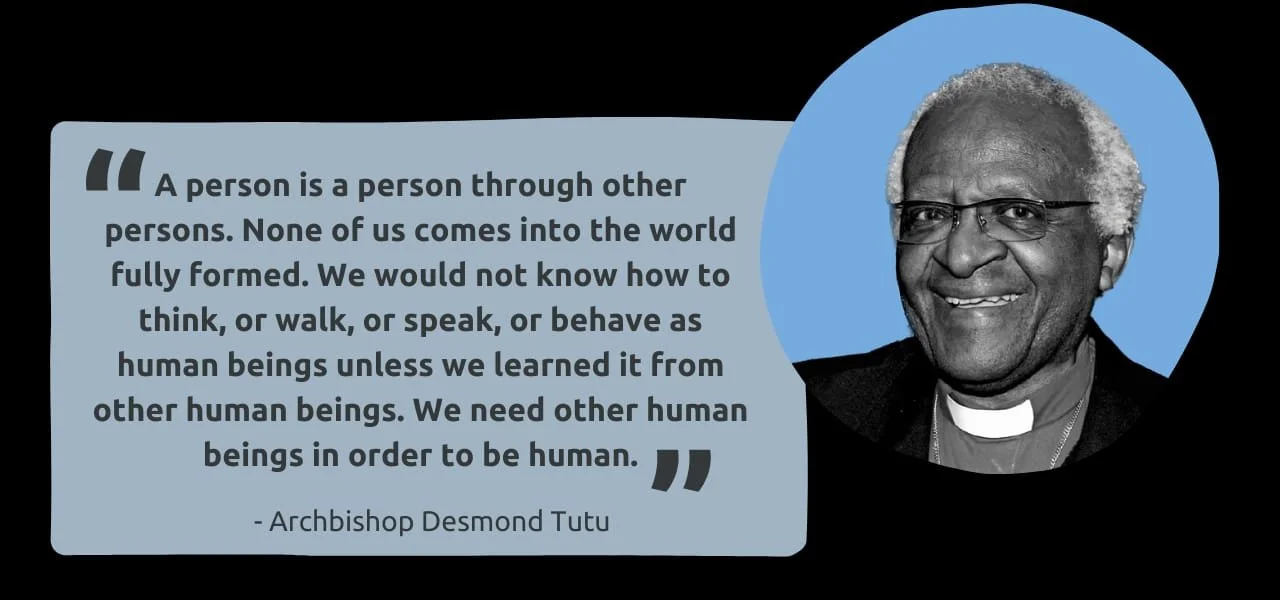
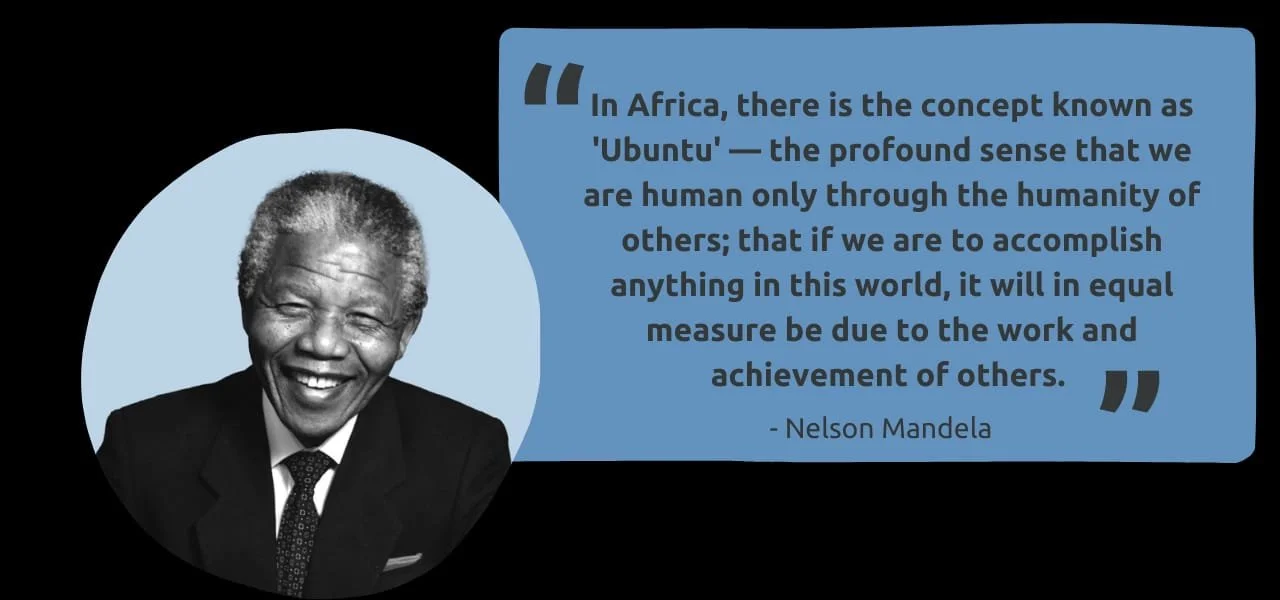
Ubuntu is often summarized by the phrase: “I am because we are.” While the expression has become globally popular, Ubuntu represents more than a slogan. It reflects a way of understanding personhood that has shaped many African communities for generations. Human beings are not understood as isolated individuals but as persons whose identities are formed through relationships, responsibilities, and obligations to others.
The global appeal of Ubuntu stems from its emphasis on dignity, reciprocity, compassion, and mutual care. Figures such as Nelson Mandela and Desmond Tutu drew on Ubuntu in articulating a vision of reconciliation during and after apartheid. In doing so, they presented Ubuntu as one of Africa's most significant contributions to ethical thought.
But Ubuntu did not emerge in a vacuum. Its influence is tied to the communal traditions that have characterized many African societies. Extended families, collective responsibility for children, communal labour, care for elders, hospitality toward strangers, and shared approaches to survival were not simply ideals. They were lived realities that shaped everyday life across many African communities. Ubuntu, therefore, is not merely a philosophical "thing." It is rooted in historical experiences of community and interdependence. This is precisely why recent developments are so troubling.
Over the past two decades, South Africa has experienced recurring episodes of xenophobic violence directed at migrants from elsewhere on the African continent. Citizens of Nigeria, Zimbabwe, Mozambique, Ethiopia, Ghana, Somalia, Malawi, and other countries have often found themselves blamed for unemployment, crime, and economic hardship. Businesses have been attacked, livelihoods destroyed, and lives lost. The causes are complex. High levels of unemployment, persistent inequality, competition for scarce resources, and political rhetoric all contribute to social tensions. Similar forms of hostility toward migrants can be found in many parts of the world.
Yet the South African case carries a particular symbolic weight because of Ubuntu. For many Africans, the contradiction is difficult to ignore. If fellow Africans are viewed with suspicion, exclusion, or hostility, what happens to a philosophy built upon the recognition of our shared humanity? The question is not intended to condemn South Africa. Rather, it is an invitation to reflect on a broader challenge confronting the continent. What happens when African philosophical traditions encounter contemporary political and economic realities?
These questions emerged for me while working on a project examining Omoluabi, a Yoruba philosophy of intellectual character and moral formation. At its core, Omoluabi emphasizes integrity, curiosity, humility, responsibility, honesty, respect, courage, and commitment to the well-being of others. It is a vision of human flourishing grounded in good character and communal responsibility. While discussing aspects of Yoruba history and identity, I found myself reflecting on an important question. If Omoluabi teaches the cultivation of good character, what should we make of instances where some Yoruba individuals fail to embody those virtues? The answer seems straightforward. The existence of vice does not invalidate a moral tradition.
No one would reject the value of honesty because some people lie. Likewise, the existence of individuals who fail to live according to Omoluabi does not undermine the significance of the philosophy itself. If anything, it reminds us why such ethical traditions remain necessary. This realization led me back to Ubuntu. Perhaps xenophobia does not disprove Ubuntu. Perhaps it reveals how urgently Ubuntu is needed.
The disappointment expressed by many Africans today is partly rooted in memory. Across the continent, African countries played significant roles in supporting the struggle against apartheid. Governments, labour movements, students, religious organizations, and ordinary citizens mobilized resources in support of South Africans seeking freedom. Nigeria was among the countries that invested heavily in the anti-apartheid struggle through financial contributions, diplomatic efforts, scholarships, and sustained political advocacy. Similar commitments emerged from countries across Africa.
This history remains important because it reminds us that continental solidarity existed. Africans have demonstrated a willingness to sacrifice for one another in moments of collective struggle. This is why reactions to xenophobia often carry emotional weight. They are not simply responses to current events. They reflect a sense that bonds forged through shared histories of oppression, liberation, and mutual support are being weakened. The World Cup debate became one visible expression of those frustrations. Football was merely the occasion. The deeper issue was belonging.
It would be easy to conclude that Ubuntu has failed. But that would be too simplistic. The history of African societies provides abundant evidence of communal values, mutual responsibility, and collective care. Ubuntu emerged from those realities. It reflects something genuine about how many African communities have understood human relationships. At the same time, no society perfectly embodies its highest ideals. Economic pressures, political competition, nationalism, and social anxieties can weaken traditions of solidarity. The challenge facing Africa today is not unique. Every society struggles to live up to its moral commitments. The real question, then, is not whether Ubuntu exists.
The real question is whether contemporary Africans are willing to draw upon Ubuntu as a resource for addressing the challenges of the present. If Ubuntu helped shape Africa's understanding of community in the past, can it still guide responses to migration, belonging, and difference today? The World Cup debate suggests that many Africans are asking precisely that question. What began as a football conversation became something much larger. A reflection on the gap between Africa's communal traditions and the realities of contemporary life.
Perhaps the most important lesson is that Ubuntu should not be taken for granted. It must be continually renewed, practiced, and extended beyond ethnic, national, and political boundaries. Only then can the philosophy remain faithful to the vision of shared humanity that made it so powerful in the first place. And only then can Africans honestly answer the question: where did Ubuntu go?